
How Much Does
Air Duct Cleaning
Cost in Winter Park?
Real price ranges, honest breakdowns, and what Central Florida's humid climate means for your ductwork. No guesswork, no lowball traps.
What Winter Park Homeowners Actually Pay
Most homeowners in Winter Park pay somewhere between $300 and $600 for a standard residential air duct cleaning. That range moves based on the size of your home, how many supply and return vents you have, and what condition the ductwork is in when the technician opens it up.
A 1,500-square-foot house with 10 to 12 vents is a different job than a 3,000-square-foot home with 20-plus vents and flexible duct runs throughout the attic. Larger systems take longer to clean properly and require more powerful vacuum pressure to clear. For a thorough overview of what drives pricing, the air duct cleaning cost factors homeowners should know page goes deeper on each variable.
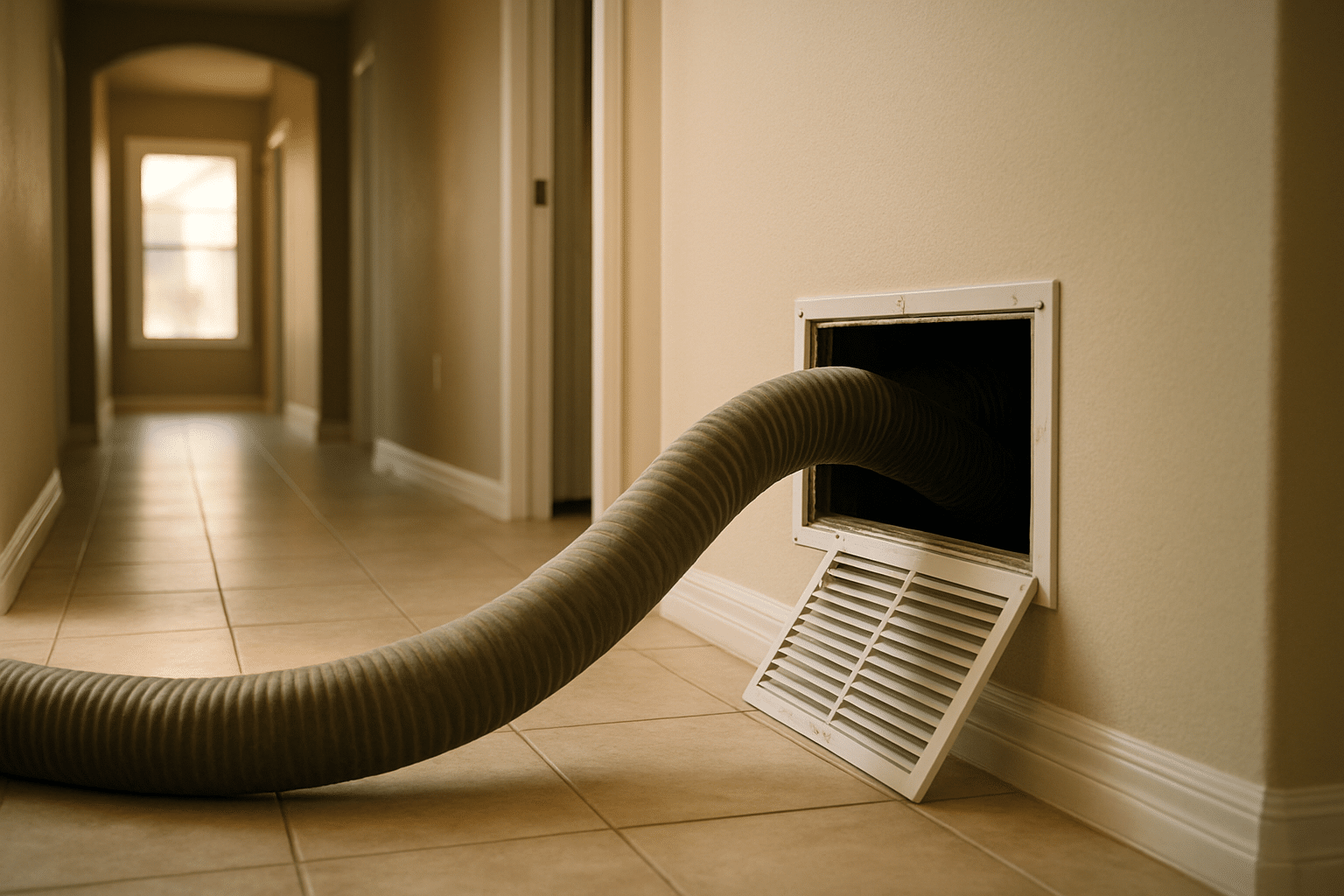
If you want air duct cleaning in Winter Park FL done properly, the job should include negative pressure, contact-based agitation inside the ducts, and a visual inspection before and after. Anything short of that is a cleaning in name only.
Central Florida's climate is a real factor. Winter Park sits in a subtropical zone where summer humidity regularly runs above 80 percent. That moisture finds its way into attic-mounted duct systems, especially in homes with flex duct that sags or has loose connections. Humidity inside ductwork accelerates the growth of mold and encourages dust to clump and stick to duct walls instead of staying loose. Homes here tend to need more frequent attention than houses in dry climates.
For reference on cleaning frequency: In climates like Central Florida's, the U.S. Environmental Protection Agency and the National Air Duct Cleaners Association generally suggest evaluating your ducts every 3 to 5 years, and sooner if you have pets, allergies, or visible debris at the registers. See EPA.gov and NADCA.com for guidelines.
Smaller homes, 10 or fewer vents, accessible ductwork in good shape.
Average Winter Park home, 12 to 18 vents, standard flex duct system.
Larger homes, heavy buildup, add-ons like sanitizing or mold treatment.
The Factors That Move the Number Up or Down
Home Size and Vent Count
Most companies price by the number of vents, typically supply and return openings combined. A standard rate runs between $25 and $45 per vent. A home with 15 vents at $35 each comes to $525 before any add-ons. Some companies offer flat-rate pricing by square footage instead, which can work in your favor on a home with more vents than average.
Ask any company you call how they count vents. Some count only supply registers. Others count every opening including returns, which is the right approach since both need to be cleaned. If a quote seems low, check whether they are counting the same things your technician will actually clean.
Duct Condition
Ducts that have gone 10 or more years without cleaning often have compacted debris that requires multiple passes. Technicians may need to use rotary brush systems in addition to high-powered vacuum extraction. That extra labor adds time and cost. If your system has mold, the job shifts from a standard cleaning to a remediation, which carries its own separate price. Read more about air duct mold removal if that applies to your situation.
Duct Type and Layout
Most Winter Park homes built after 1990 use flexible duct. Flex duct is harder to brush out than rigid sheet metal because the inner liner is corrugated and traps debris in its ridges. Older homes with sheet metal duct can sometimes be cleaned faster. Homes with multiple air handlers, split-level layouts, or ductwork buried under insulation take longer regardless of duct type.
Add-On Services and What They Actually Cost
Sanitizing is the most common add-on. It involves applying an EPA-registered antimicrobial agent to the interior duct surfaces after cleaning. In a humid climate like Winter Park's, this can make sense if the technician finds biological growth or heavy moisture during inspection. Expect to pay an additional $75 to $150 depending on system size.
Duct sealing is a different service. If your inspection reveals leaky duct joints, sealing them with mastic or foil tape reduces conditioned air loss and can lower your electric bill. The cost varies widely based on how many leaks exist and how accessible they are. You can read more about air duct coating and encapsulation versus HVAC duct sealing to understand when each approach applies. Dryer vent cleaning is often offered at the same visit for an additional $80 to $120 and is worth doing if you have not had it done recently.
Is It Worth It for Winter Park Homes Specifically?
Short answer: yes, and the local climate is a big reason why. Most of the country runs their air conditioning for four or five months. In Winter Park, your HVAC system runs hard from April through October and does not fully rest even in winter. That constant circulation moves whatever is in your ductwork through the air you breathe every day.
Humidity above 60 percent inside a duct system creates conditions where dust mite populations grow and where organic material decomposes rather than drying out. If you notice a musty odor from your vents, especially when the system first kicks on, that is a signal worth taking seriously. Check out the 10 signs your air ducts need professional cleaning for a full checklist.
Homes with residents who have asthma or seasonal allergies tend to see the most noticeable improvement after cleaning. Dirty ducts can also restrict airflow enough to make your system work harder, which shows up on your power bill. Learn more about how dirty air ducts can increase your electric bill.
HVAC runs year-round
Continuous operation means continuous debris circulation. More runtime equals faster duct contamination compared to cooler-climate homes.
Humidity accelerates buildup
Moisture makes dust stick and clump inside duct walls. Dry dust falls out easily; wet, clumped debris requires mechanical agitation to remove.
Attic-mounted duct systems
Attic temperatures in Winter Park can exceed 130 degrees Fahrenheit in summer. That heat stresses flex duct and can cause separations that let attic air and insulation fibers enter the system.
Pest activity in attics
Rodents and insects that enter through attic penetrations sometimes travel through or nest in flex duct. This is more common in Florida than in northern climates and changes the nature of what needs to be cleaned out.
The Problem with Low-Ball Quotes
Quotes under $99 for a whole-house air duct cleaning are a red flag. Some companies advertise an extremely low base price, then add fees for every vent, every return, every access point, and a list of "required" treatments that get presented on-site. By the time the job is done, you have paid more than a fair market price for work that was often rushed.
The low-price model also tends to come with cheap equipment. A truck-mounted negative pressure vacuum pulls significantly more CFM than a portable shop-vac style unit. Proper cleaning requires sustained negative pressure maintained throughout the system while each duct is individually agitated. Without that negative pressure, debris disturbed during brushing just settles elsewhere in the duct instead of being extracted. For a full breakdown of what proper cleaning actually involves, see how air ducts are cleaned professionally.
A transparent company will give you a firm total price over the phone or via a written estimate after asking specific questions about your home. They will ask how many vents you have, the age of your system, when it was last cleaned, and whether you have noticed any moisture or odor issues. If a company quotes you a price without asking any of those questions, be cautious.
What a Certified Technician Actually Does
A proper inspection before cleaning is not a sales tool. It is how a technician figures out what they are actually dealing with before they start.
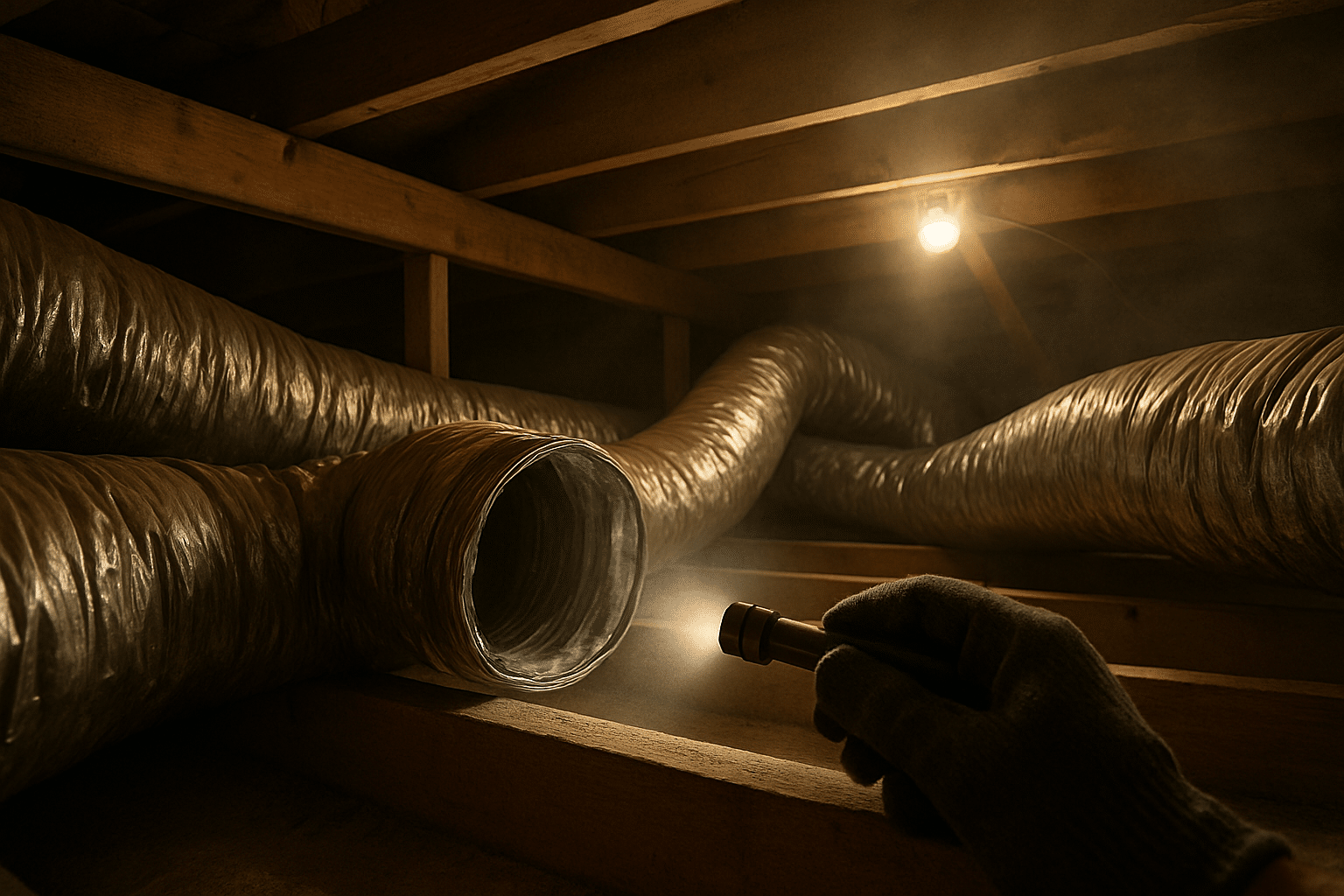
That inspection includes checking the air handler cabinet for dust accumulation on the blower wheel and evaporator coil, looking at the supply plenum for moisture or biological growth, inspecting visible duct runs for disconnections or damage, and using a camera where ductwork is not directly visible. Some technicians use a handheld inspection camera threaded into the ducts through the registers.
After the inspection, you should receive a clear explanation of what was found, what the recommended scope of work is, and why. If the technician recommends sanitizing, they should be able to show you what they found that warrants it. If they recommend duct repair or sealing, they should show you the specific locations. You can also read more about when cleaning is the right call on the does cleaning air ducts really work page.
Cleaning itself on an average Winter Park home takes two to four hours. Larger homes or systems with heavy buildup can take longer. Anyone who tells you a whole-house cleaning takes 45 minutes is not doing it thoroughly.
How Often Should You Clean in Central Florida?
In a dry climate, every five to seven years is a reasonable baseline. In Central Florida, three to five years is more realistic for most homes. If you have pets that shed, if someone in the household has respiratory issues, or if you have recently done renovation work that generated drywall dust or insulation debris, move that timeline up. Renovation debris is particularly bad because it is fine-particulate and coats duct surfaces quickly.
If you are buying a home and do not know when the ducts were last cleaned, get an inspection done before moving in. You will not know what the previous occupants had living in the home, whether they had pets, or how the system was maintained. Starting fresh in a new home is almost always worth the cost. For climate-specific guidance, how often air ducts should be cleaned by climate breaks this down further.
If you are comparing air duct cleaning to an HVAC tune-up and wondering which to prioritize, those are different services addressing different parts of your system. See air duct cleaning versus HVAC tune-up for a clear explanation of what each covers.
Frequently Asked Questions About Cost
These are the questions homeowners ask most often before booking. Plain answers, no upsell.
Why do quotes vary so much from company to company? ▼
Three main reasons. First, some companies price by vent count, others by square footage, and others by flat rate. Second, the equipment varies significantly. A truck-mounted system costs far more to operate than portable equipment, and that cost is reflected in the quote. Third, scope varies. A thorough cleaning includes the air handler, supply and return ductwork, and all registers. A minimal cleaning might skip the handler and do surface-only work on the ducts. Always ask what exactly is included before comparing numbers.
Is sanitizing worth the extra cost in Florida's climate? ▼
It depends on what the inspection finds. If the technician sees visible biological growth, detects a musty odor in the duct system, or finds moisture-related buildup, sanitizing adds real value. If your ducts are dry with standard dust accumulation, it is optional. A good technician will show you why they are recommending it. If they recommend it for every single customer without looking at your specific system, that is worth questioning. For homes with occupants who have dust mite allergies, sanitizing can be a useful complement to cleaning. See dust mite allergy symptoms and whether air duct cleaning helps.
Can I clean my own air ducts to save money? ▼
You can clean the register covers and vacuum the first few inches of each vent opening. That removes surface debris at the grilles. It does not reach the main duct runs, the supply plenum, the return air boxes, or the air handler components. Those areas require specialized equipment to access and extract from without redistributing debris throughout the system. DIY cleaning gives the appearance of maintenance without addressing the actual contamination points that affect air quality and system performance.
Does homeowner's insurance cover duct cleaning? ▼
Standard homeowner's policies treat duct cleaning as maintenance, not a covered loss. The exception is when duct contamination results directly from a covered event such as fire damage or water intrusion from a covered leak. In those cases, remediation work sometimes falls under the claim. For routine cleaning, you pay out of pocket. Some HVAC maintenance plans offered by local HVAC companies include periodic inspections that may flag when cleaning is needed, but the cleaning itself is usually a separate charge.
What should I ask before booking a company? ▼
Ask whether they use truck-mounted or portable vacuum equipment. Ask what is included in the price, specifically whether the air handler and blower are part of the service. Ask how they count vents for pricing. Ask whether they will provide a written quote before starting work. Ask how long the job will take. If the estimate is under 90 minutes for a standard home, ask why. Good companies welcome these questions. They should be able to answer all of them without hesitation. For more on choosing a reputable provider, how to choose the top-rated duct cleaning company for your home covers the full evaluation process.
Will cleaning my ducts make a noticeable difference? ▼
If your ducts are heavily soiled, yes. Homeowners with heavily contaminated systems often report less dust on surfaces, reduced odors, and better airflow at registers after cleaning. If your ducts are only mildly dirty, the change may be subtle. The benefit is not always dramatic, but it is cumulative over time. A clean system puts less strain on the blower motor and filter, which affects the long-term health of the HVAC equipment. For a realistic look at what results to expect, the top air duct cleaning benefits lays it out honestly.
Ready to Know Exactly What Your Job Will Cost?
We ask the right questions upfront and give you a firm number before anyone shows up at your door. No bait-and-switch, no surprise add-ons at the job site.
For more detailed guidance on duct cleaning pricing nationally, the National Air Duct Cleaners Association (NADCA) publishes standards for what a proper cleaning should include. The U.S. EPA also maintains consumer guidance on indoor air quality and duct cleaning. Both are useful references when evaluating any service provider. You can also explore the full range of air duct cleaning services we offer, or connect with our air duct specialists in Orlando, FL for any questions about your specific system.
© 2026 Air Duct Cleaning Titans. Serving Winter Park and the greater Orlando metro area.