
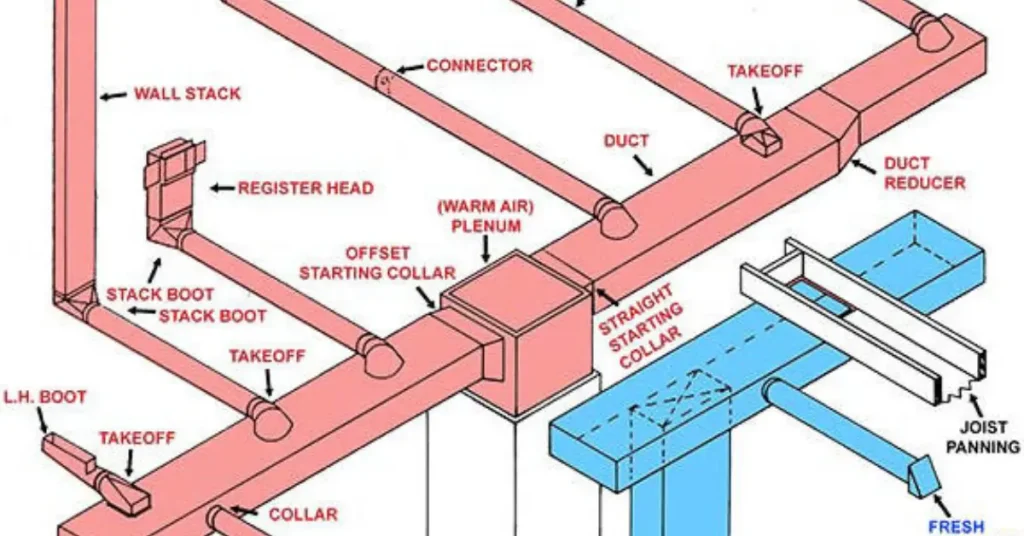
Ever wonder why some rooms in your home feel like a sauna while others stay freezing? The answer usually comes down to air duct design. As someone who has worked on countless systems over the years, I can tell you this stuff matters more than most people think. Good air duct design keeps your home comfortable and your energy bills low. Bad design? Well, that leads to hot spots, cold spots, and wasted money. Let me walk you through what you need to know.
What Is Air Duct Design and Why Does It Matter?

Simply put, air duct design is the planning process for your home’s airflow system. It determines how heated or cooled air travels from your unit to every room. When I work on a project, I think of it like designing roads for air to travel through your house.
Here’s the thing most homeowners don’t realize. Your HVAC unit might be top of the line. But without proper air duct design, it won’t perform well at all. I’ve seen brand new systems struggle because the ductwork was poorly planned. The layout, sizing, and materials all play crucial roles in how comfortable your home feels year-round.
Understanding the Duct Design Process for Your HVAC System
The duct design process starts with a complete assessment of your home. We look at square footage, ceiling heights, insulation levels, and window placement. Every detail affects how we plan the system. This isn’t guesswork; it’s calculated engineering that ensures proper air distribution.
When I approach a new project, I also consider your HVAC system’s capacity. The blower needs to push air through every inch of ductwork efficiently. Too much resistance and your system works overtime. Too little and you get uneven temperatures. Finding that balance is what separates good air duct design from great results.
How Proper HVAC Duct Sizing Affects Performance
Getting HVAC duct sizing right is honestly one of the trickiest parts of my job. Ducts that are too small restrict airflow and strain your system. Ducts that are too large waste energy and reduce air velocity. Neither situation is good for your comfort or your wallet.
I always calculate the exact CFM, or cubic feet per minute, needed for each room. This tells me precisely what size ducts will deliver optimal performance. Trust me, I’ve fixed plenty of systems where someone guessed at sizing. The difference proper calculations make is night and day for homeowners.
Key Elements of Residential HVAC Duct Systems
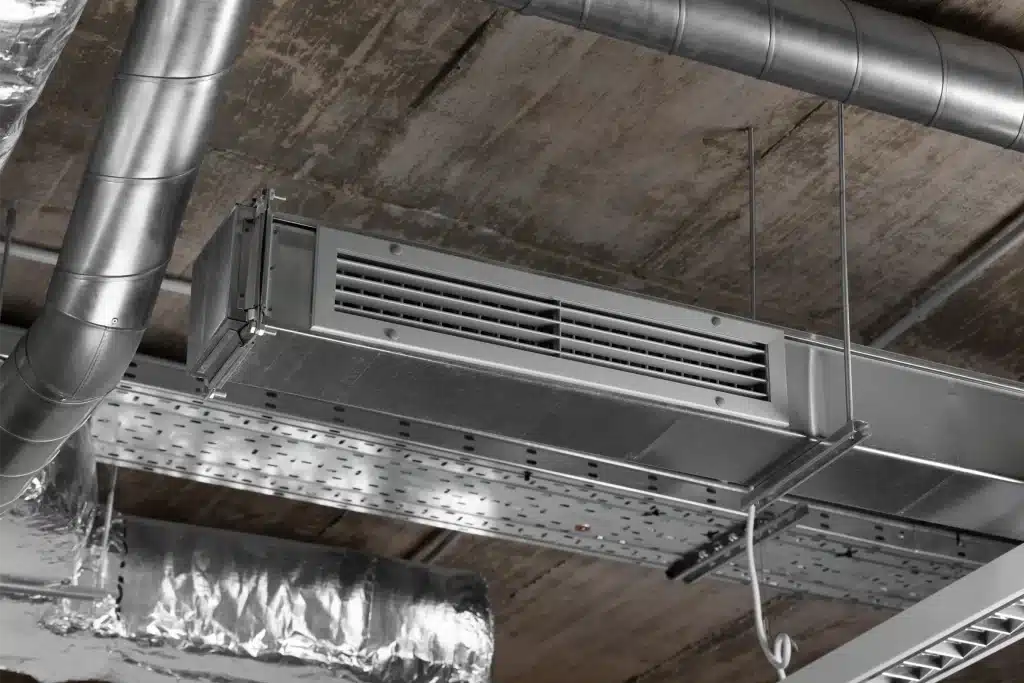
A residential HVAC duct system has several components working together. You’ve got supply ducts that deliver conditioned air to rooms. Return ducts bring air back to the unit. Then there are registers, grilles, and dampers that control flow throughout your home.
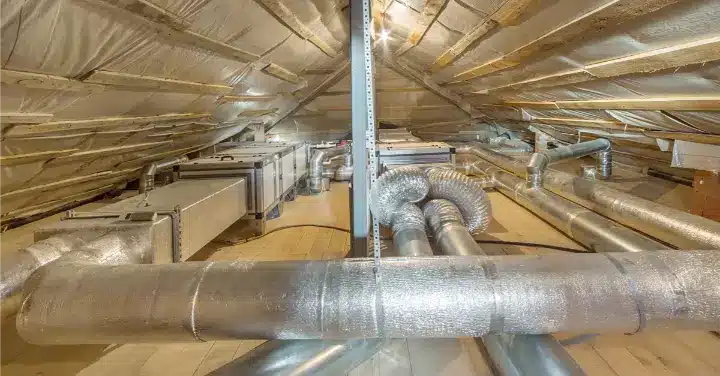
Materials matter too in air duct design. Most homes use sheet metal, fiberglass duct board, or flexible ducts. Each has pros and cons depending on your situation. Sheet metal lasts longest but costs more. Flex duct installs quickly but can reduce airflow if bent improperly. We choose based on what works best for each specific home.
Ductwork Design Basics Every Homeowner Should Know
Understanding some ductwork design basics helps you make smarter decisions. First, shorter duct runs are always better than long ones. Every foot of ductwork creates friction that reduces airflow. That’s why we try to keep equipment centrally located when possible.
Second, turns and bends hurt efficiency. We use gradual curves instead of sharp angles whenever we can. Here are the key principles I follow on every job:
- Keep duct runs as short and straight as possible
- Size each branch properly for the room it serves
- Seal all connections to prevent air leaks
- Insulate ducts in unconditioned spaces like attics
- Balance airflow so every room gets an adequate supply
How Technicians Use HVAC Duct Design Software Today
Modern HVAC duct design software has completely changed how we work. These programs let us model your entire home digitally before installation begins. We can test different configurations and predict exactly how air will flow through the system.
I remember when we did everything with manual calculations and paper drawings. Now, HVAC design software catches errors we might have missed. It also helps us show homeowners exactly what we’re planning. When you can see a 3D model of your new duct system, it makes the whole process clearer and builds confidence.
Signs You Need a New Design for Your Duct System
Sometimes repairs aren’t enough, and you need a completely new design. How do you know when that time comes? Watch for rooms that never reach comfortable temperatures, no matter what you try. High energy bills, despite a newer HVAC unit, also signal problems with air duct design.
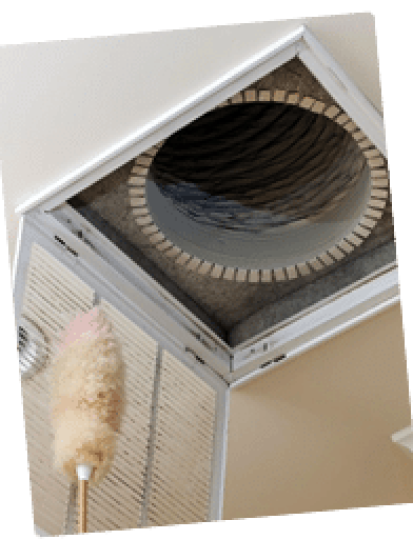
Excessive dust, strange noises, or weak airflow from vents are other red flags. I’ve walked into homes where the existing ductwork was undersized for additions built years later. In cases like these, patching things together just won’t cut it. A fresh approach to your air duct design delivers lasting comfort and efficiency improvements.
Trust the Experts for Professional Air Duct Design
Look, I get that hiring professionals costs money. But proper air duct design affects your comfort every single day. It impacts your energy bills every month. And it influences how long your equipment lasts over the years. This isn’t an area where cutting corners makes sense.
When you work with experienced technicians, you’re getting years of hands-on knowledge. We’ve seen what works and what fails in hundreds of homes. We understand local building codes and manufacturer requirements. Most importantly, we stand behind our work with warranties. Your home’s comfort system deserves that level of expertise and attention to detail.
Frequently Asked Questions
Q: How long does professional air duct design take to complete?
A: The design phase typically takes one to three days, depending on your home’s complexity. Simple layouts wrap up quickly, while larger homes need more analysis time. After design approval, installation usually takes another one to three days. We work efficiently to minimize disruption. The upfront planning ensures everything goes smoothly during the actual installation process.
Q: Can I improve my existing duct system without a complete redesign?
A: Yes, sometimes modifications help significantly. Adding dampers, sealing leaks, or insulating exposed sections can improve performance. However, if your ducts are severely undersized or poorly routed, Band-Aid fixes won’t solve underlying problems. A professional assessment determines whether upgrades or a complete redesign make more sense for your situation.
Q: What's the average lifespan of a properly designed duct system?
A: Well-designed and maintained ductwork typically lasts 15 to 25 years. Sheet metal ducts often exceed that timeframe with proper care. Flexible ducts may need replacement sooner, especially if damaged. Regular inspections help catch problems early. Sealing and insulation maintenance extends system life significantly while maintaining efficiency.
Q: How much does professional duct design and installation cost?
A: Costs vary based on home size, complexity, and materials chosen. Basic residential projects range from $2,000 to $5,000. Larger homes or challenging layouts can reach $8,000 to $12,000. Always get multiple estimates and ask detailed questions. Quality installation pays for itself through lower energy bills and improved comfort over time.
Q: Does duct design affect my indoor air quality?
A: Absolutely, it plays a huge role, actually. Properly designed systems maintain adequate air circulation and filtration throughout your home. Leaky or poorly planned ductwork can pull in dust, allergens, and pollutants from attics or crawlspaces. Sealed, well-designed systems keep conditioned air clean while efficiently filtering out contaminants.
Q: Should I upgrade my ductwork when replacing my HVAC unit?
A: It depends on your current ductwork’s condition and compatibility. Older ducts may not handle newer, higher-efficiency equipment properly. I recommend having both evaluated together. Sometimes modifications suffice, while other situations call for complete replacement. Matching your ductwork to your new unit ensures optimal performance and protects your investment.